Visiting Machu Picchu is one of those travel experiences that sits high on almost everyone’s bucket list, and for good reason. It is not just about the ruins themselves but also the journey there, winding through the Sacred Valley with its lush greenery, towering peaks, and fresh mountain air. For me, it felt like the perfect blend of history and nature. The train ride offered endless views of rivers and villages tucked between steep cliffs, while Aguas Calientes had that misty, tucked-away charm you only find in mountain towns. I only stayed one night, but from the moment I arrived to that first quiet sunrise inside the citadel, the whole experience felt unforgettable.

When I Went
Mid-March 2025

How Long I Stayed
2 days / 1 night

Nearly Packed List
Click to expand my full list
Clothes: leggings, shorts, t-shirts, long sleeve shirt, hoodie, light layers, swimsuit for hot springs
Shoes: hiking boots or sturdy walking shoes
Essentials: warm socks, underwear, hat, sunglasses
Outerwear: decent hiking jacket, rain poncho or rain mac (easy to buy in town)
Gear: camera body + lens, spare battery, memory cards
Extras: reusable water bottle, sunscreen
Best Time to Visit Machu Picchu
Machu Picchu is open year-round, but your experience will vary depending on the season.
Dry Season (April to October)
Generally considered the best time to visit. Expect clearer skies and less chance of rain, but also bigger crowds and higher prices.
Rainy Season (November to march)
Expect fewer visitors and mountains at their greenest. The trade-off is a much higher chance of rain and occasional landslides or service delays.
Shoulder season (April, May, September, October)
These months are often the best balance. You still get good weather and lush scenery, with fewer crowds than in peak season.
Transitional months (March and November)
These can also be rewarding times to visit. The ruins are quieter and the landscapes are vibrant, but showers are more unpredictable.
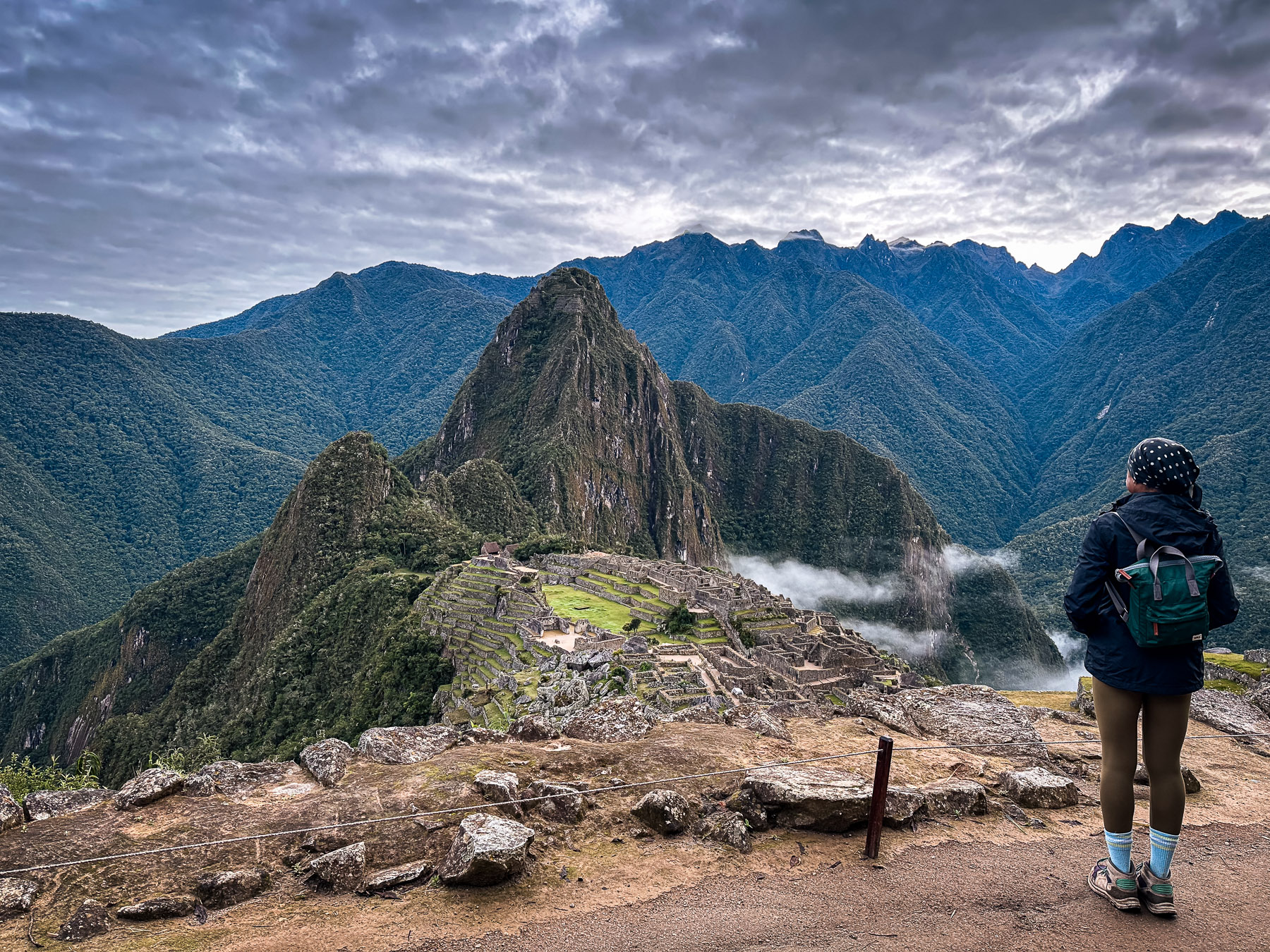
I went in March, right at the end of the rainy season, and found it to be a great compromise. The mountains were strikingly green, there were far fewer people than in peak season, and although there were some showers, none of them spoiled the experience. Plus, I had a clear view of Machu Picchu.
What To Expect in Aguas Calientes
Language
Spanish is the official language in Peru. In Aguas Calientes, most hotels, restaurants, and ticket offices cater to tourists, so you can get by with basic English, but a few Spanish phrases and Google Translate will go a long way.
Currency
The currency in Peru is the Sol (PEN). Cash is essential in Aguas Calientes, especially for market stalls or small shops. Larger hotels and restaurants typically accept card, but it is good to carry a little cash.
Getting Around
Aguas Calientes is a small town, and everything is within easy walking distance. To reach Machu Picchu itself, you can either hike uphill from town (about an hour to 90 minutes, steep and demanding) or take the shuttle bus which runs frequently and takes about 20 minutes.
Plugs
Peru uses plug types A and C, with a standard voltage of 220V. It is worth bringing a universal adapter if you are travelling with different plug types.
Safety
Aguas Calientes is generally safe, especially compared to bigger Peruvian cities. The main thing to watch out for are overpriced tourist traps. In Machu Picchu itself, safety is well managed, but remember to pace yourself on the stairs, especially if you are feeling the altitude.
Getting to Aguas Calientes + Machu Picchu
Unless you are hiking the Inca Trail or another multi-day trek, every visitor to Machu Picchu must first travel to Aguas Calientes (also called Machu Picchu Pueblo). This small town sits at the base of the ruins and is the gateway to the site.
Travel Tip
Many accommodations in Cusco will happily store your large backpack or suitcase for you. I left mine behind and travelled with only a small daypack, which made the whole journey much easier.
The most common option is to take the train, either directly from Ollantaytambo or via the bimodal service (only necessary during rainy season, otherwise it’s just the direct train service) from Cusco. From Cusco’s Wanchaq Station, you take a bus to Ollantaytambo, where you transfer onto the train for the final leg into Aguas Calientes. This is very well organised and staff ensure that you get to where you’re supposed to be going. The journey is long (though it doesn’t feel like it!) and very scenic, passing through villages and winding deeper into the Sacred Valley.
Peru Rail
PeruRail offers different classes of service. The most expensive is the Vistadome Observatory, which includes panoramic windows, live entertainment, and access to an observatory car with an outdoor balcony. I chose the Vistadome, which still has large panoramic windows on the walls and ceiling. For me, it offered the same incredible views without the much higher price tag.
My outbound journey departed Cusco at 07:20 and arrived in Aguas Calientes at 12:11. On the way back, I took the 13:37 service and arrived in Cusco at 17:30. If you are short on time, I recommend booking an earlier return train, as there is not much to do in Aguas Calientes once you have visited Machu Picchu.
My outbound journey departed Cusco at 07:20 and arrived in Aguas Calientes at 12:11. On the way back, I took the 13:37 service and arrived in Cusco at 17:30. If you are short on time, I recommend booking an earlier return train, as there is not much to do in Aguas Calientes once you have visited Machu Picchu.
Other Things to Do in Aguas Calientes
Mandor Falls
A short and easy hike from town, Mandor is a quiet escape surrounded by lush forest. The trail follows the railway tracks for part of the way and leads to a small but beautiful waterfall. There is a modest entrance fee, but it is well worth it if you want some peace away from the tourist bustle.
Hot Springs
The town is named after its thermal waters, and you can visit the public baths at the top of Aguas Calientes. They are simple and can get crowded, but they offer a relaxing soak, especially if you arrive after trekking or a long day of walking at Machu Picchu.
Artisan Market
Near the train station you will find the Mercado Artesanal, a maze of little stalls filled with textiles, souvenirs, and handicrafts. It is very much a tourist market, but still a fun place to browse if you want to pick up a small gift or keepsake.
Butterfly House
The Mariposario de Machupicchu is a family-run butterfly garden located just outside town. It is a small project but interesting if you have an extra hour. You will see several native butterfly species and learn about their conservation.
Where to Stay in Aguas Caliente
Accommodation in Aguas Calientes ranges from simple hostels to boutique-style hotels. Since most people spend just one night, it is worth booking somewhere central so you are close to the bus station and restaurants. The town exists mainly to serve Machu Picchu visitors, so while it is convenient and functional, it is not the cultural highlight of a trip to Peru.
Aguas Calientes + Machu Picchu Through the Lens
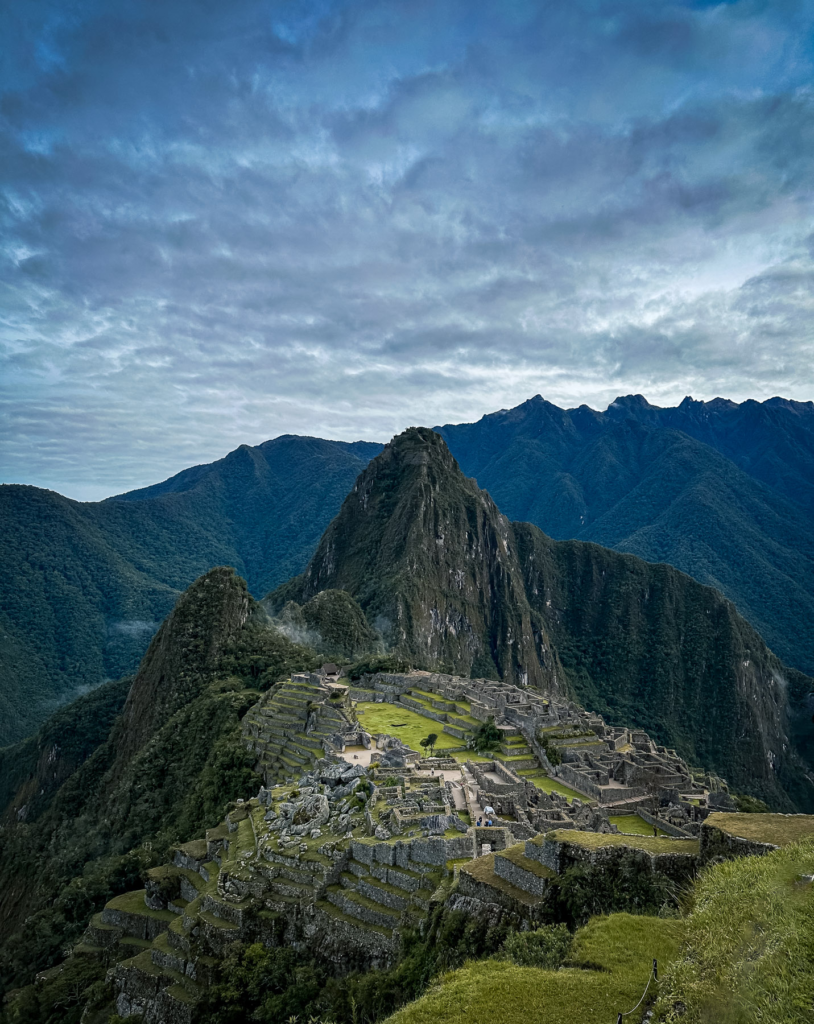
Photographing Machu Picchu at sunrise is every bit as special as you would expect. The soft morning light catches the terraces and surrounding peaks, creating a cinematic atmosphere that feels almost timeless. Arriving early meant I could frame the classic wide shots without large crowds in the way.
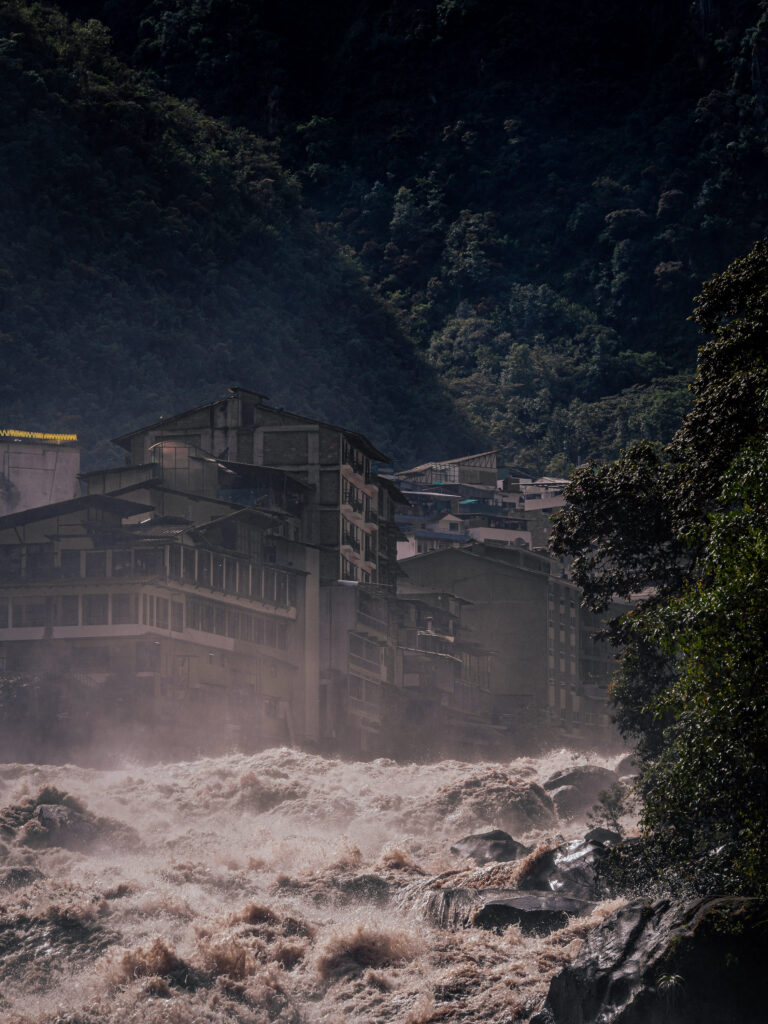
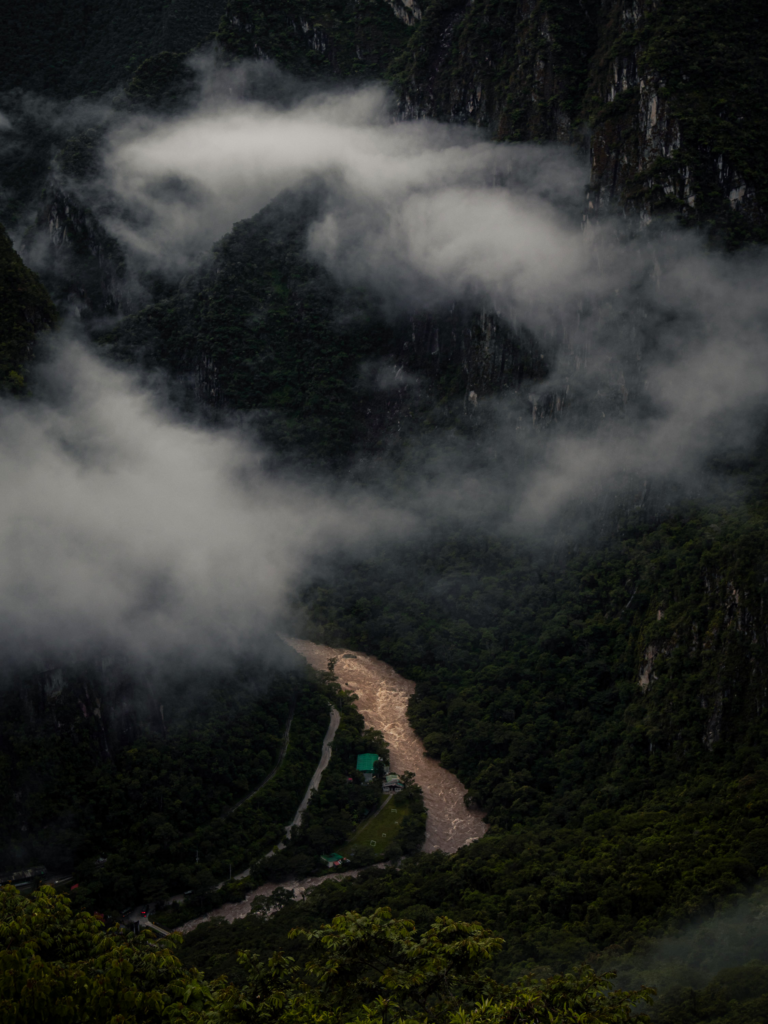
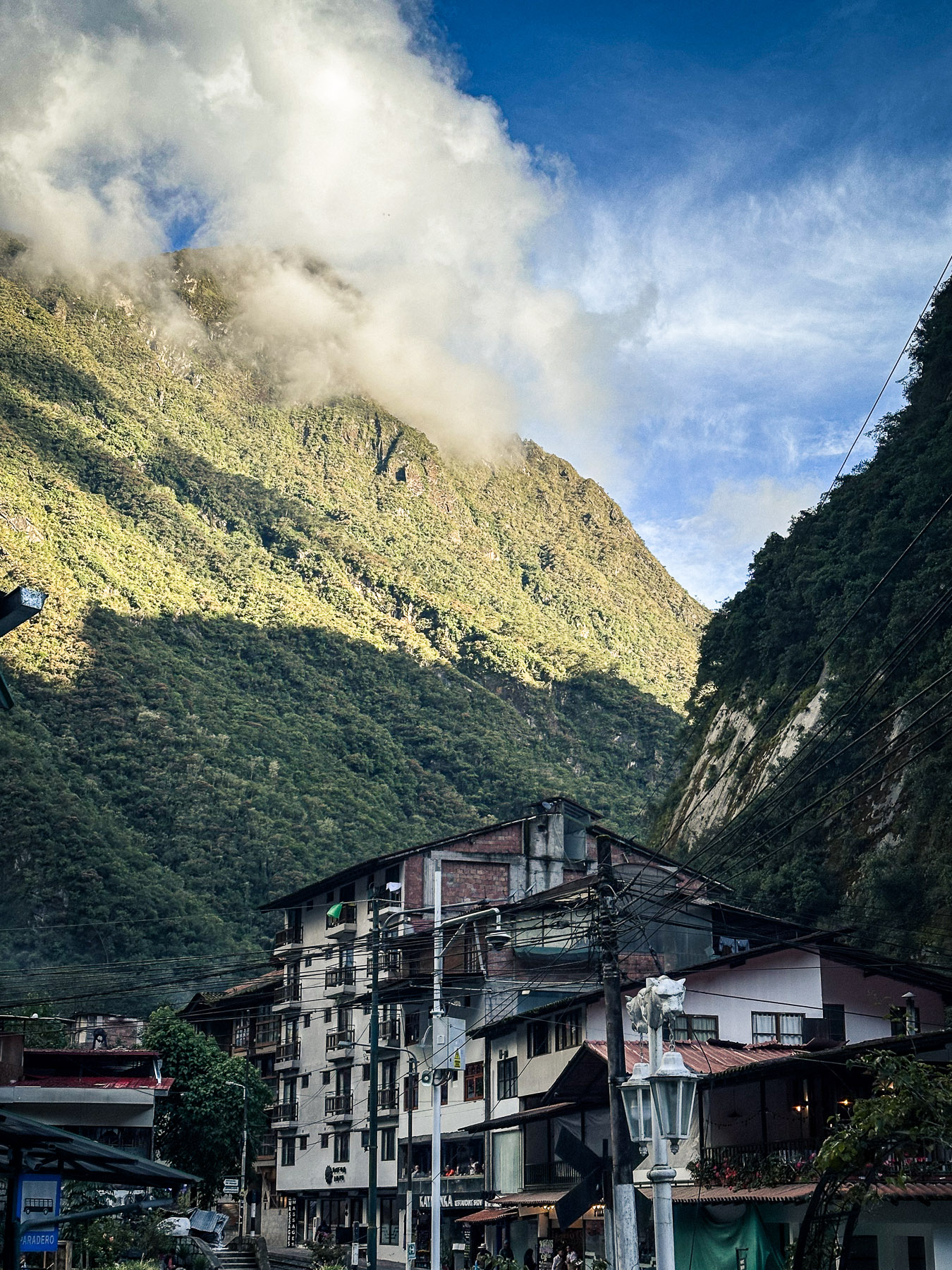
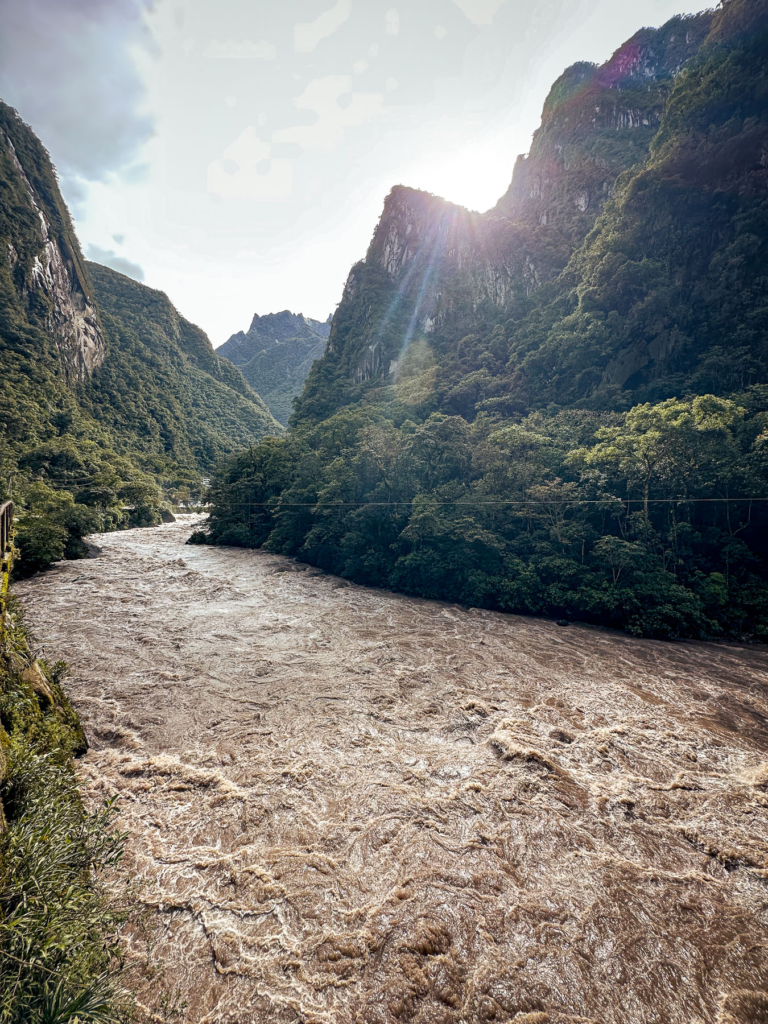
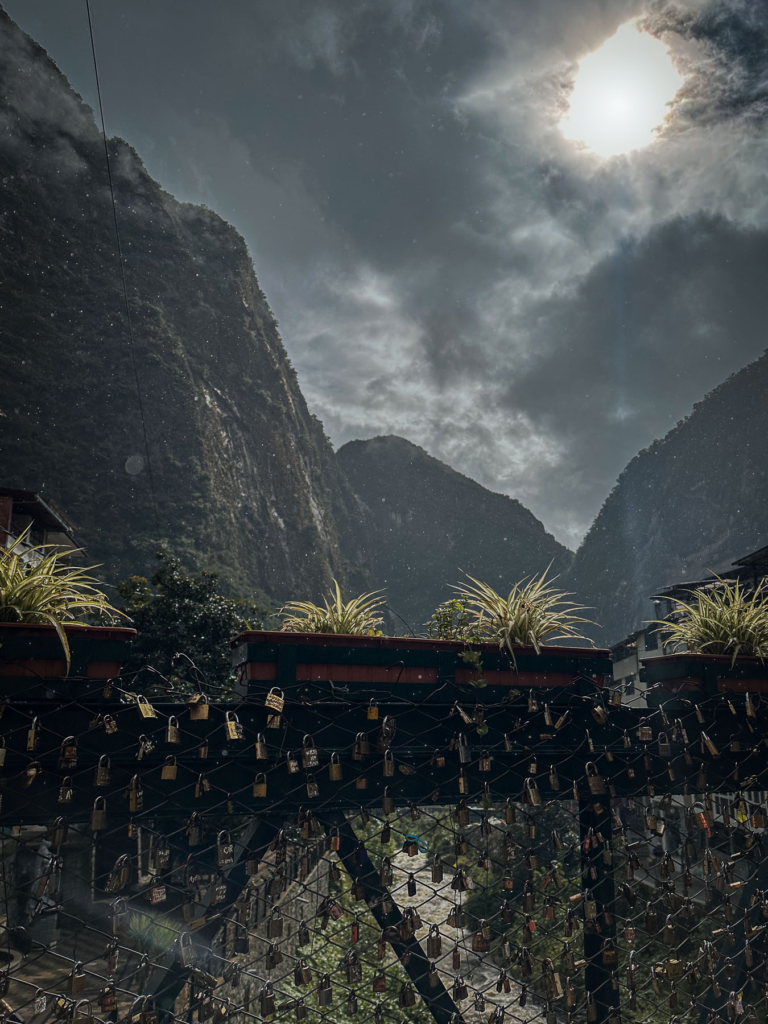
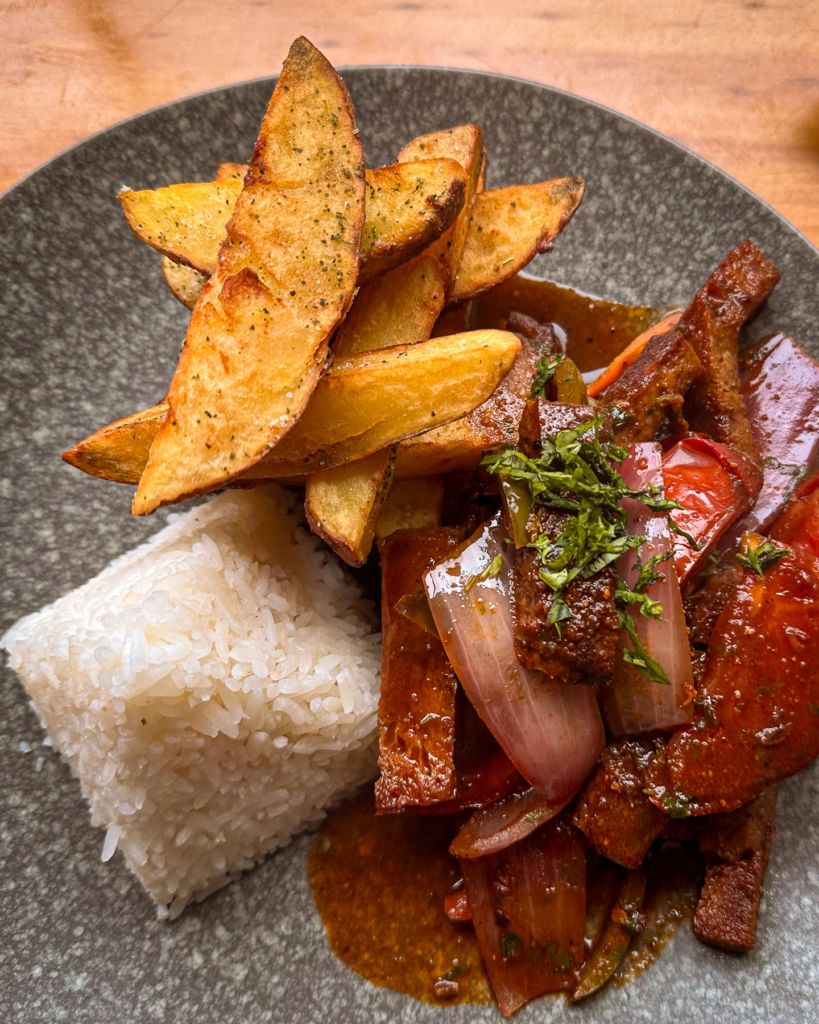
Aguas Calientes offered a very different kind of photography. The town is tucked deep in the valley, where mist rolls down the mountains and the Urubamba River roars through its centre. I found plenty of moody, dramatic scenes including suspension bridges framed by jungle, stormy skies above the rooftops, and the love lock bridge glowing under a break in the clouds. Even a simple plate of vegan lomo saltado photographed beautifully against the backdrop of a rainy mountain afternoon.
Together they created the perfect contrast: the serene, ancient atmosphere of Machu Picchu alongside the raw, restless energy of the town that exists entirely to serve it.