Guatemala is a place that surprises you. From colourful colonial towns to dense jungle and active volcanoes, it packs a lot into a relatively small footprint. There’s raw beauty, rich culture, and just enough chaos to keep things interesting.
What drew me there most, though, was the Acatenango hike. It was the one thing I couldn’t stop thinking about before the trip, and the main reason I booked it in the first place. I’d seen the photos, heard the stories, and read all the blogs. For all the excitement, I still spent the entire week beforehand spiralling about how hard it was going to be.
Altitude, fitness, weather… I overthought all of it. And honestly? Fair enough. This hike absolutely wiped me out. I’m talking legs-burning, can’t-catch-your-breath, why did I sign up for this kind of hard.
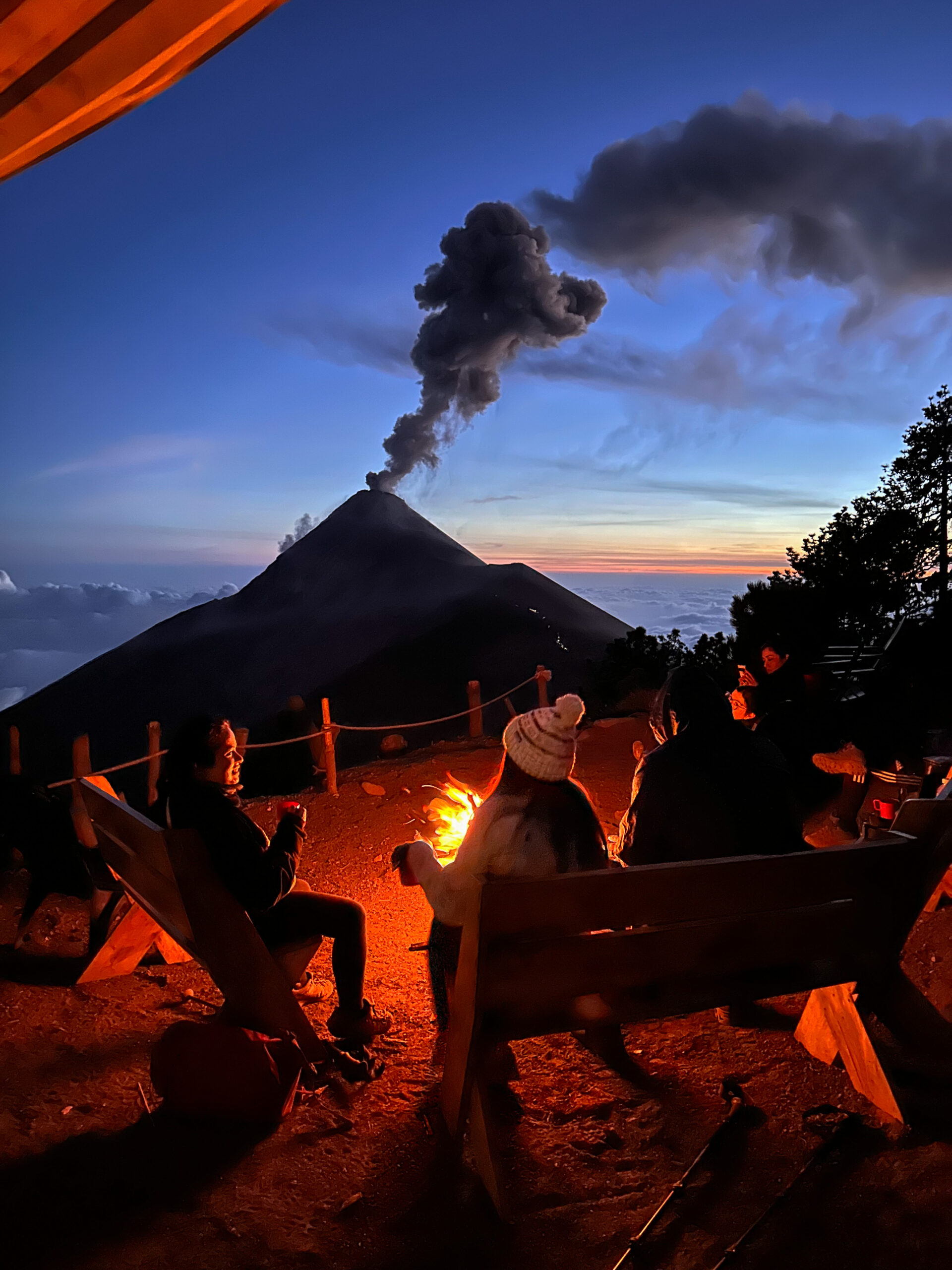
But it was also one of the most incredible things I’ve ever done. Hiking up through shifting cloud layers, camping above the tree line, and sitting around a fire, sipping hot chocolate while watching lava erupt from Fuego across the valley. It’s something I’ll never forget. I went with Wicho & Charlie, who I honestly couldn’t recommend more. From start to finish, they made the whole experience feel safe, organised, and genuinely fun, even when I was crying into my hiking poles.

When I Went
March 2024

How Long I Stayed
2 days / 1 night

Nearly Packed List
Click to expand my full list
Clothes: leggings, t-shirt, hoodie (All other clothes were rented – see Gear section)
Shoes: hiking boots
Essentials: socks, underwear, hat, sunglasses
Gear: camera body + 2 lenses, spare batteries, memory cards
Extras: reusable water bottle, sunscreen
Best Time to Do the Acatenango Hike
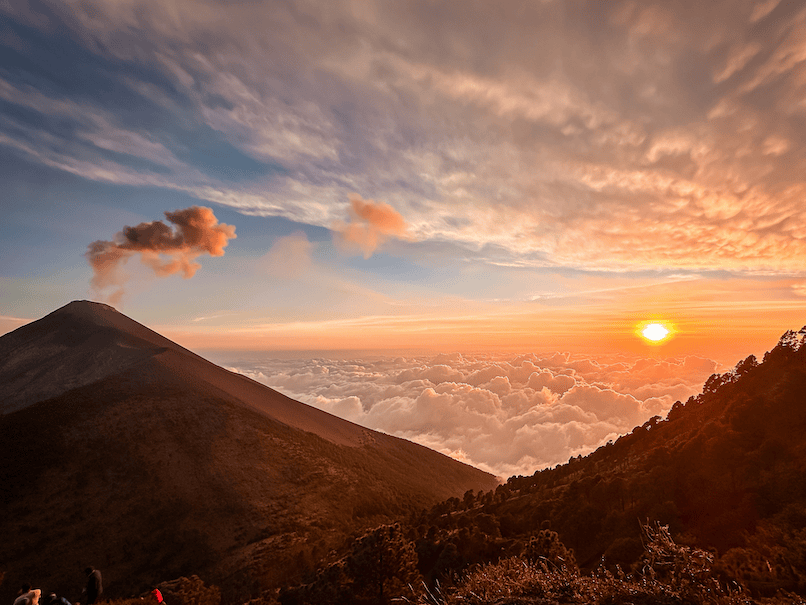
I did the Acatenango hike on 14–15 March 2024, near the end of Guatemala’s dry season. When we started, it was completely overcast. The kind of weather that makes you wonder if you’ll see anything at all. But after a few hours of climbing, we broke above the clouds and were met with a view I’ll never forget. That night, Fuego erupted in wild bursts of lava, ash, and glowing embers. A proper show that felt both surreal and strangely calm to watch from across the valley.
NOVEMBER to APRIL
This is the dry season and generally the best time to do the hike. Skies tend to be clearer, the trail is less muddy, and you have a stronger chance of seeing Fuego in action. Nights at base camp are freezing, but conditions are typically stable and visibility is good.
MAY to OCTOBER
This is Guatemala’s rainy season. The trail can get slippery and cloud cover more persistent, so views of Fuego aren’t guaranteed. That said, some people still hike during this time and get lucky with clear breaks. Just pack well, including rain gear, and expect things to be more unpredictable.
A NOTE ON RECENT UNCERTAINTY
In recent seasons, some hikers have completed the trek only to find Fuego completely quiet. No glowing lava, no eruptions, nothing. Activity levels change week to week, and there is never a guarantee of seeing an eruption, even during peak months. If seeing lava is your main motivation, it’s worth knowing this going in.
What To Expect on the Acatenango Hike
gear
One of the best things about going with Wicho & Charlie is that you don’t need to carry or buy loads of gear in advance. They provide all the essential kit, including jackets, gloves, scarves, buffs, headlamps, and water bottles. You can also rent extras like trekking poles, thermal base layers, socks, or a premium backpack on the morning of the hike. I rented the poles and honestly, they were a lifesaver. I wouldn’t have made it up or down without them.
The Hike
After about an hour’s drive from Antigua to the trailhead, you start the Antenango hike climb through farmland and forest. The first ten minutes feel manageable, but then the altitude kicks in. It’s not normal tiredness. It’s the kind that makes you feel like your lungs have given up halfway through a sentence. I cried once… maybe twice. At one point I asked how far we had left and the answer was 45 minutes. That 45 minutes felt like a year. But eventually, we broke above the cloud line and everything shifted. The views were incredible and the relief was real.
Base Camp
Base camp is made up of solid A-frame cabins, built by Wicho & Charlie to face the volcano. They’re fully enclosed and sheltered from the wind, with sleeping bags, thick blankets, and mattresses already inside. There’s a shared dining cabin too, which makes a massive difference when the temperature drops. It’s basic but cosy, and waking up to the sight of Fuego still puffing smoke across the valley is something I’ll never forget.
Optional Fuego hike
If you’re up for it, there’s an optional add-on hike to Volcán de Fuego. I didn’t do it, but several people in my group did. It costs Q250 (around USD 25) and involves hiking from base camp down one side of Acatenango and up toward Fuego’s active ridge. It takes about 4 to 5 hours round trip, with part of the climb done in the dark using headlamps.
The idea is to get as close as safely possible to the eruption zone. You don’t go to the actual crater, but you end up about 150 metres from the rim. The guides assess weather conditions before confirming whether you can go, and you pay the fee afterwards once you’re back in Antigua.
That said, a lot of people in my group didn’t feel the extra hike was worth it. It was physically brutal and while they were closer, they said the view wasn’t necessarily better than what we had from base camp.
TIP YOUR GUIDES
They genuinely deserve it. Our guides were absolute legends: encouraging, patient, and funny even when we were falling apart. They carried food, helped us pace ourselves, and somehow kept the mood light the whole way up and down. You’ll want to have cash ready for tips at the end of the hike. Most people tipped in Guatemalan Quetzales (GTQ), so it’s worth planning ahead and bringing small bills.
Volcán de Fuego Through the Lens
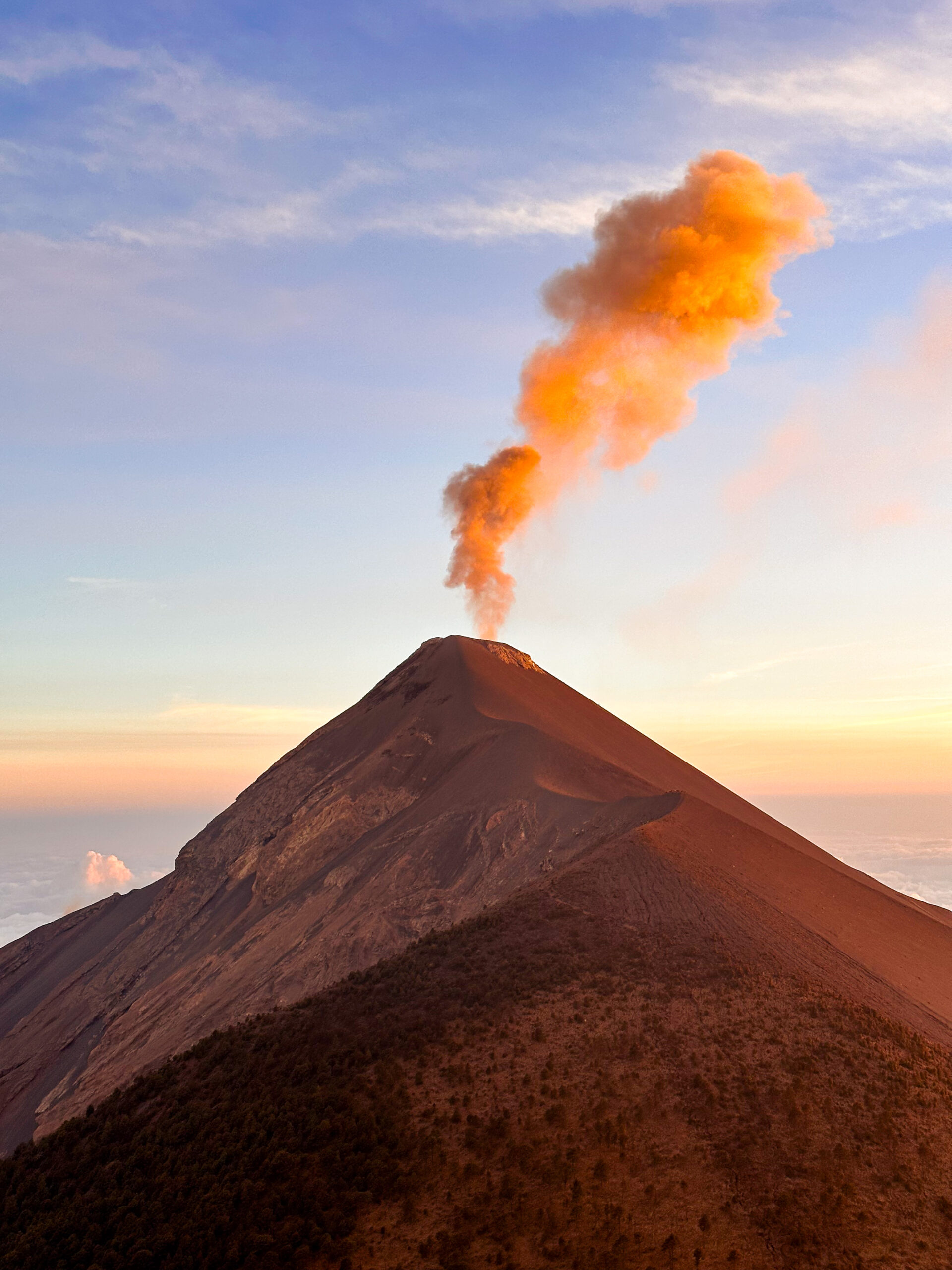
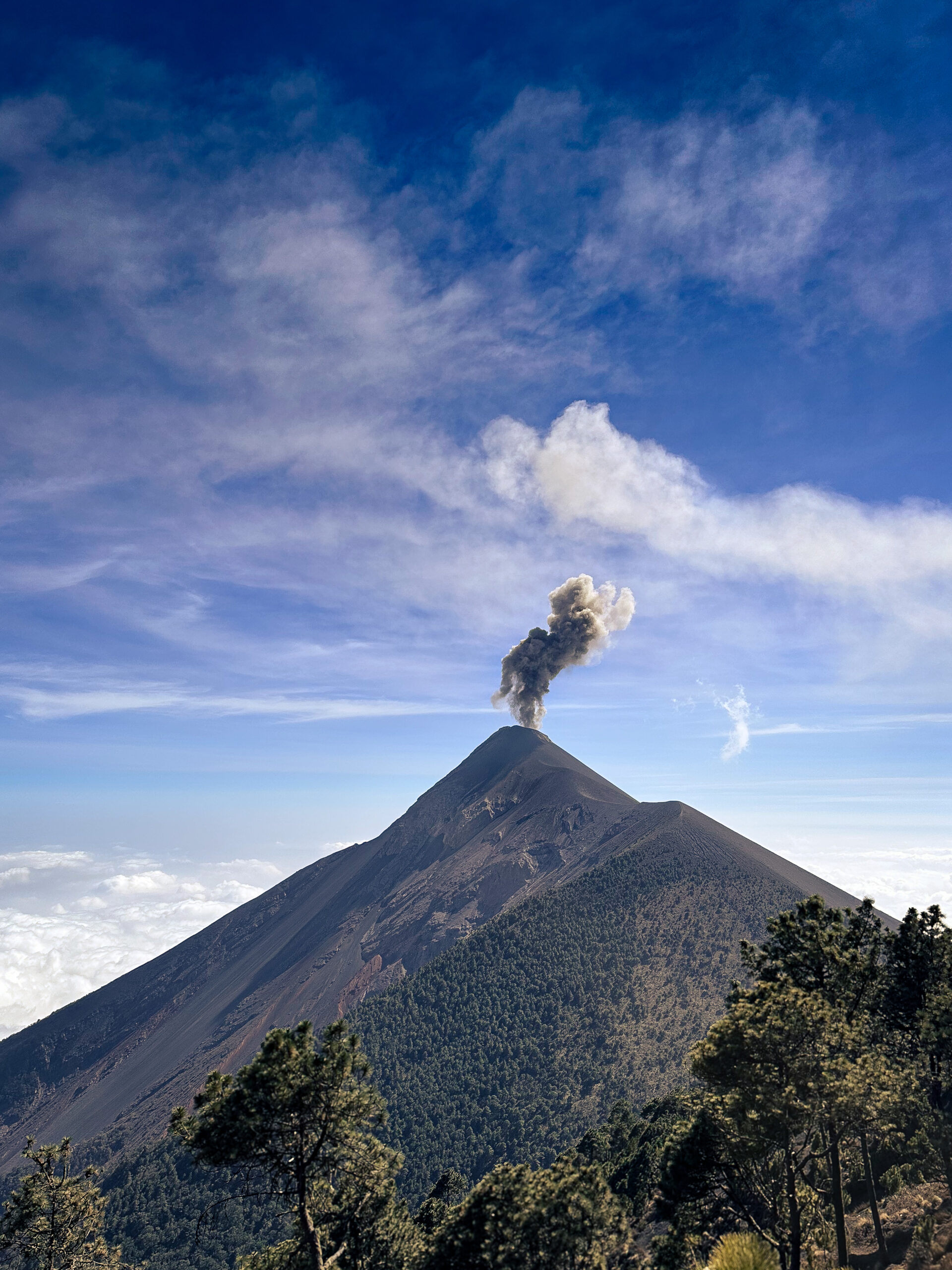
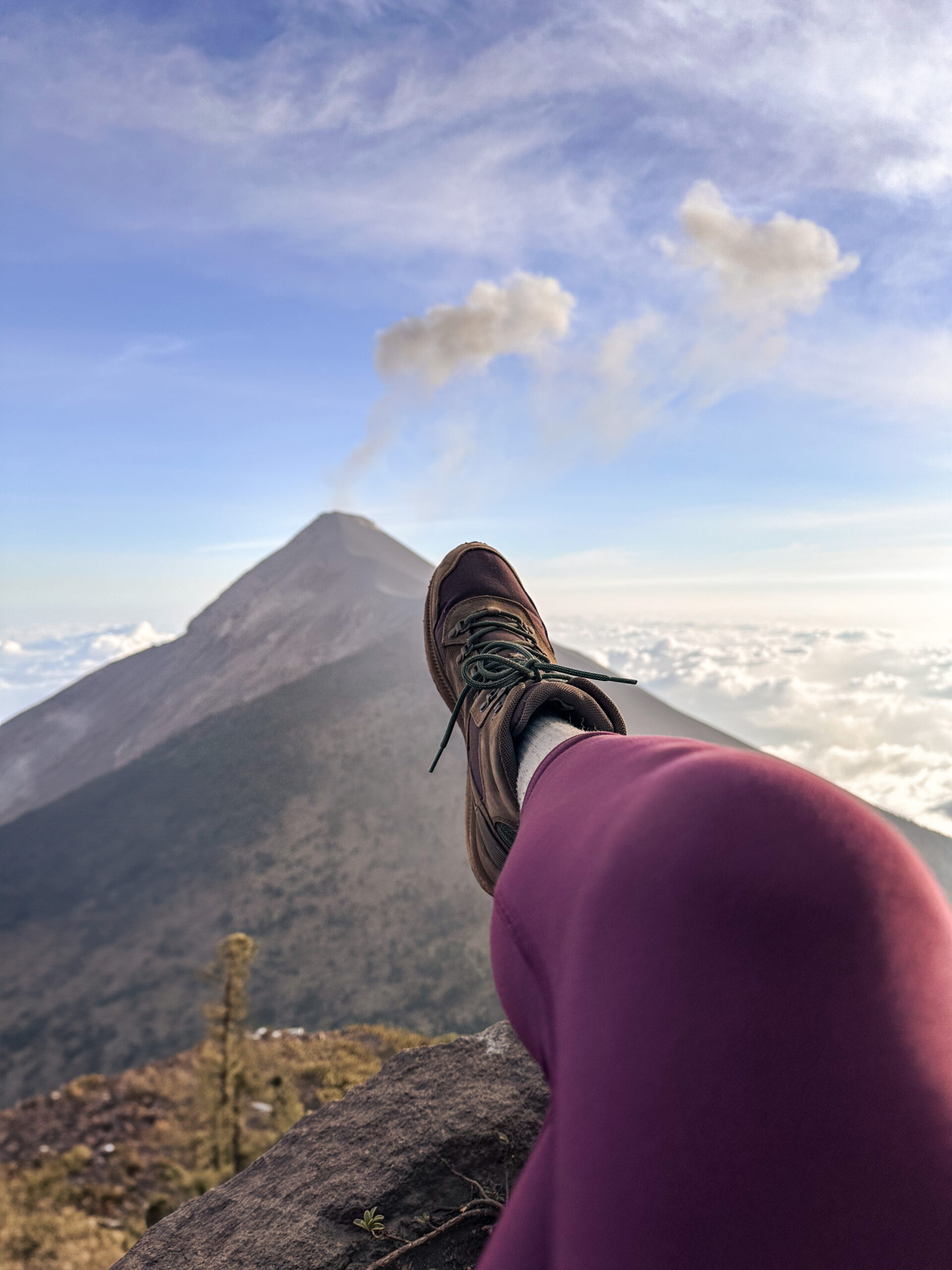
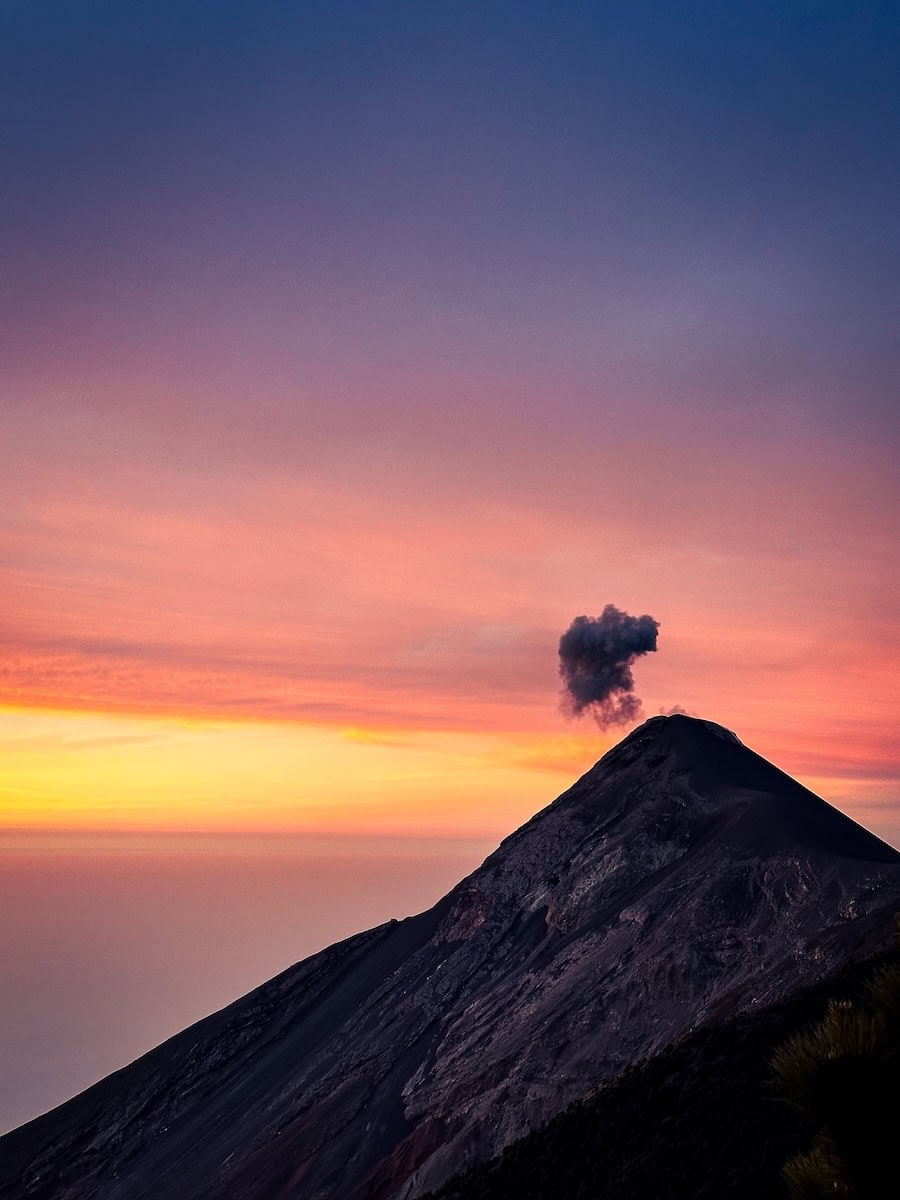
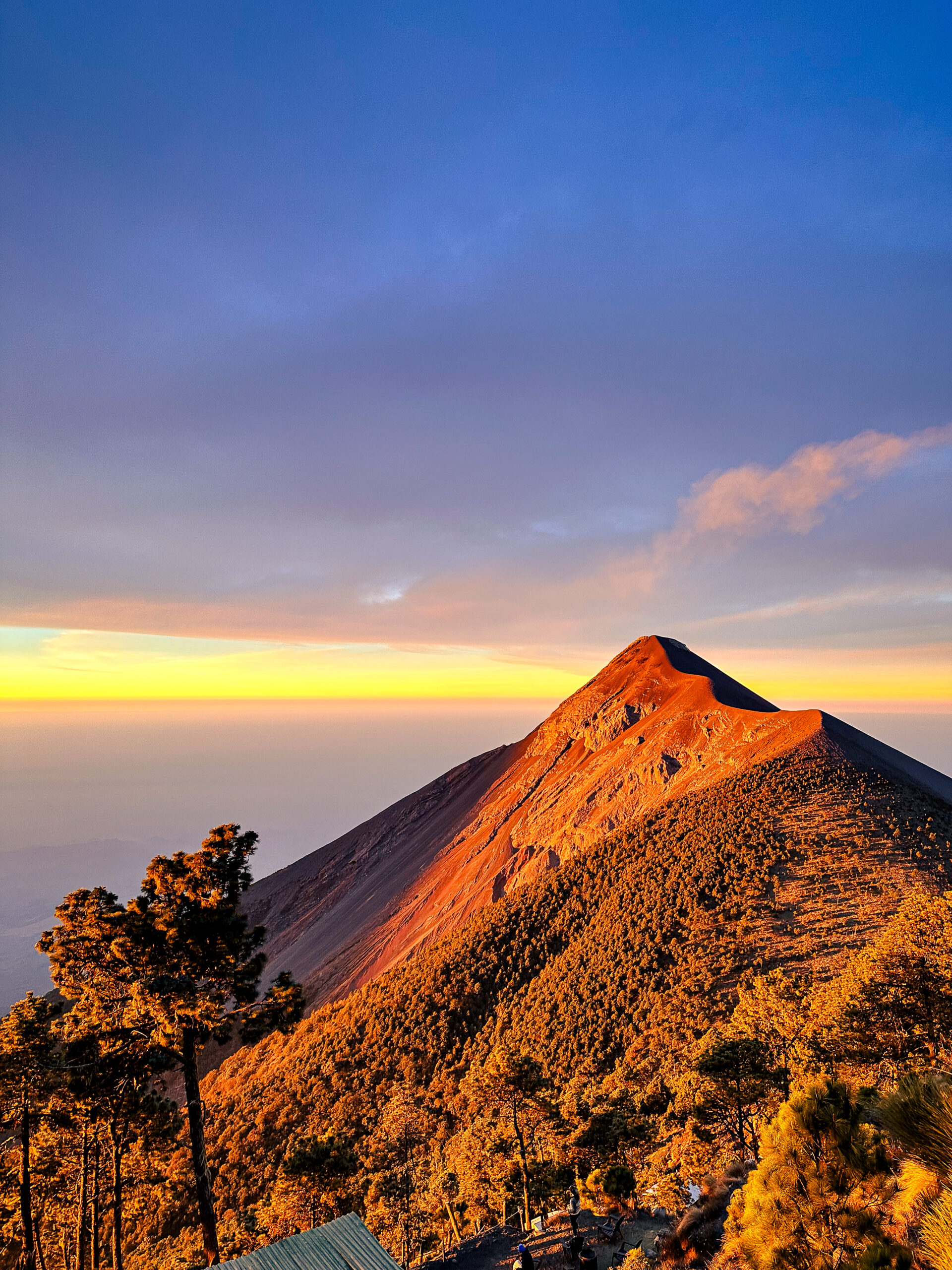
Photographing Fuego from the slopes of Acatenango felt like capturing something between a dream and a disaster film. The scenery changed constantly. One moment we were above the clouds under soft golden light, and the next we were watching smoke pour from the side of a volcano.
All of these were shot on my iPhone 14 Pro. Even through the exhaustion, I couldn’t stop reaching for it. Fuego was a constant presence, erupting again and again from dusk until dawn. Between the fiery skies, the glowing craters, and the stillness at the summit, every moment felt like it needed to be held onto.
These are some of my favourite captures from the hike.