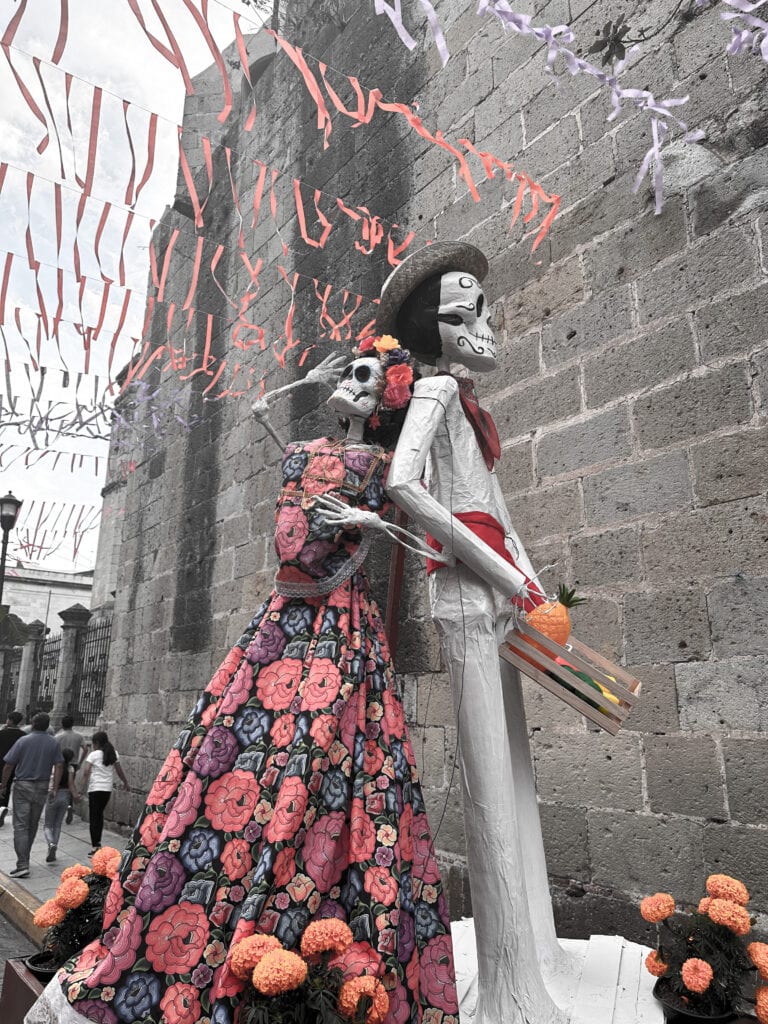
Oaxaca had been on my radar for a while, but Día de los Muertos was the reason I finally booked it. I’d planned a three week Mexico trip with stops in Mexico City and Puerto Escondido, but everything revolved around being in Oaxaca for the festival.
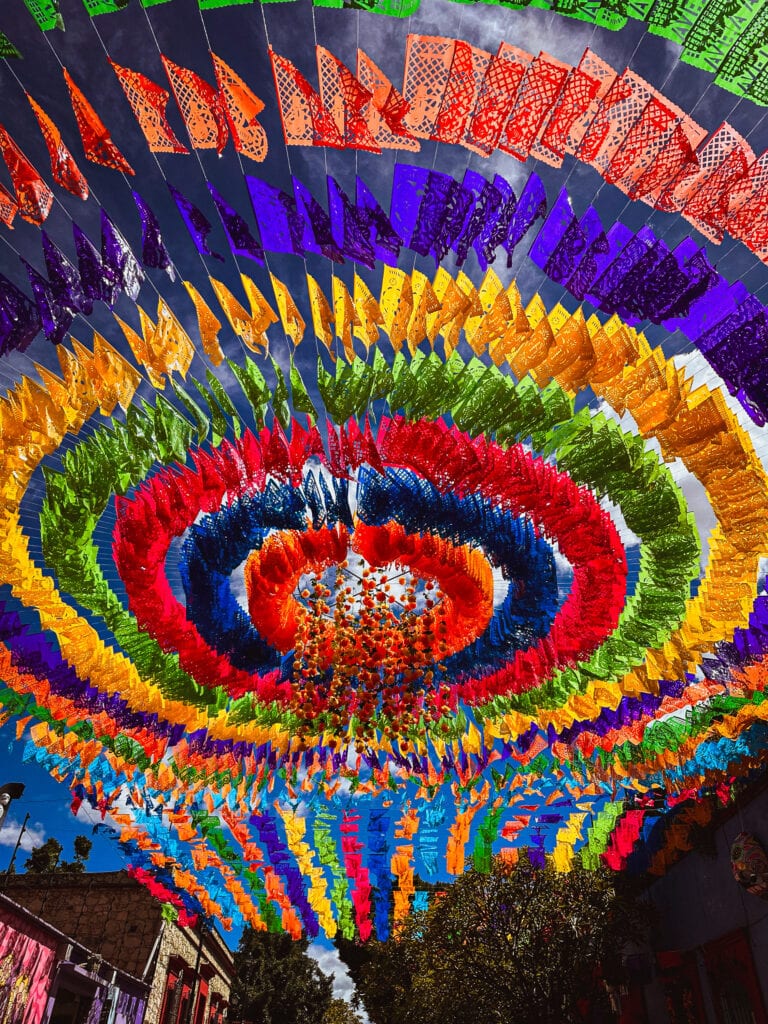
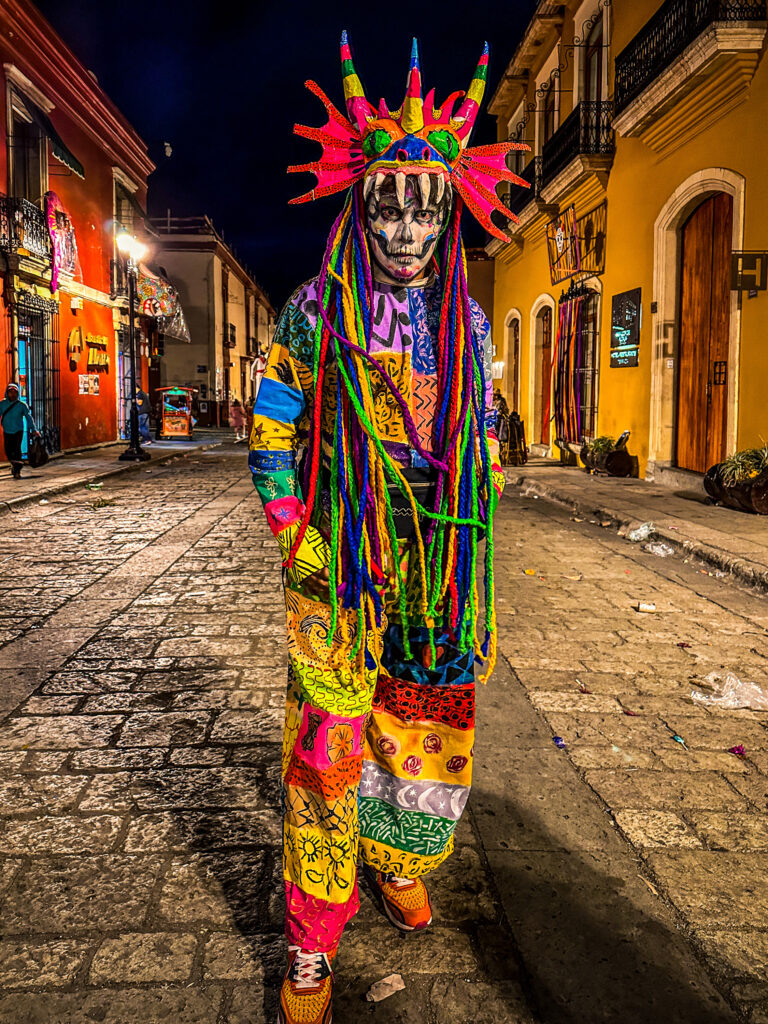
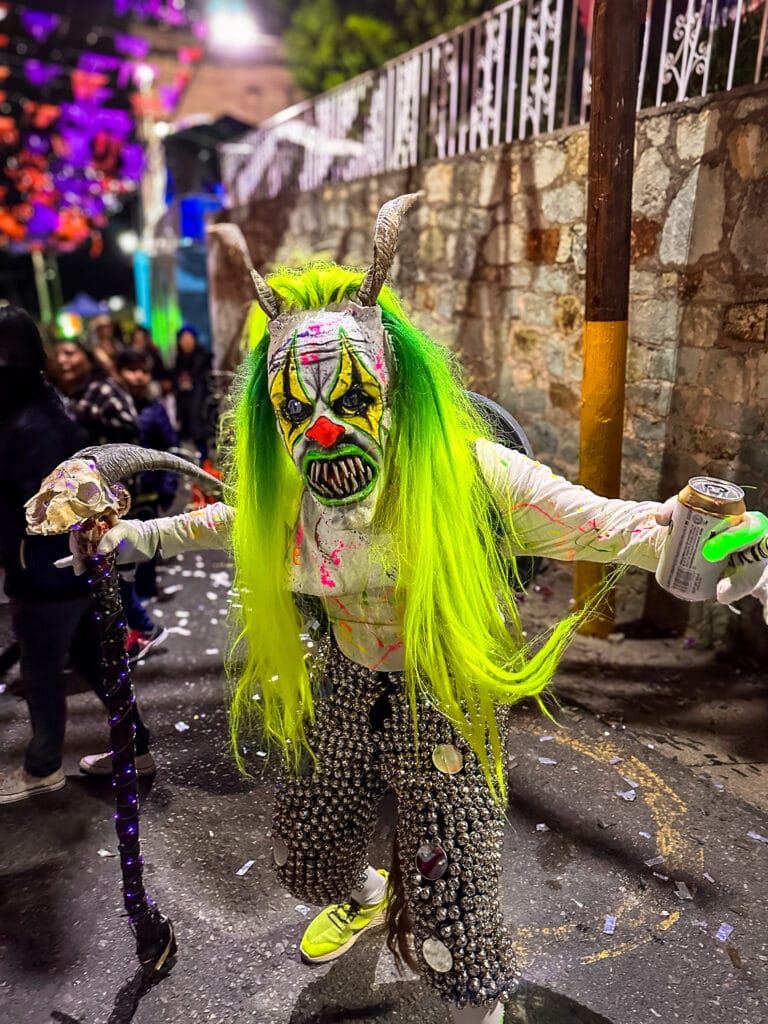
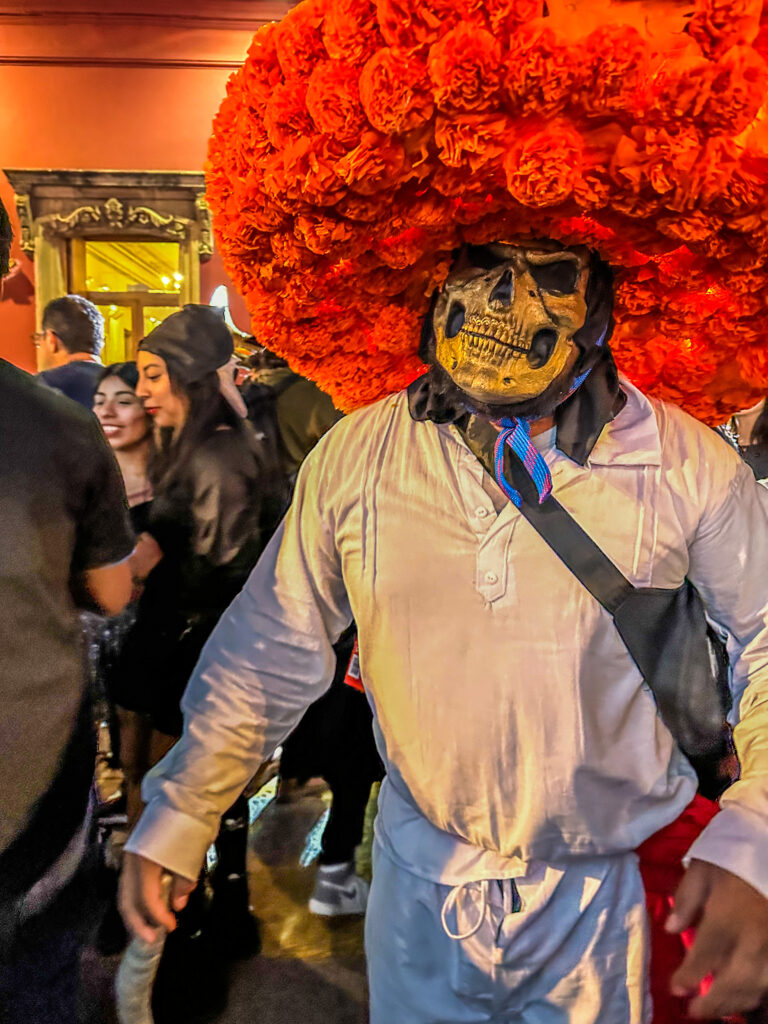
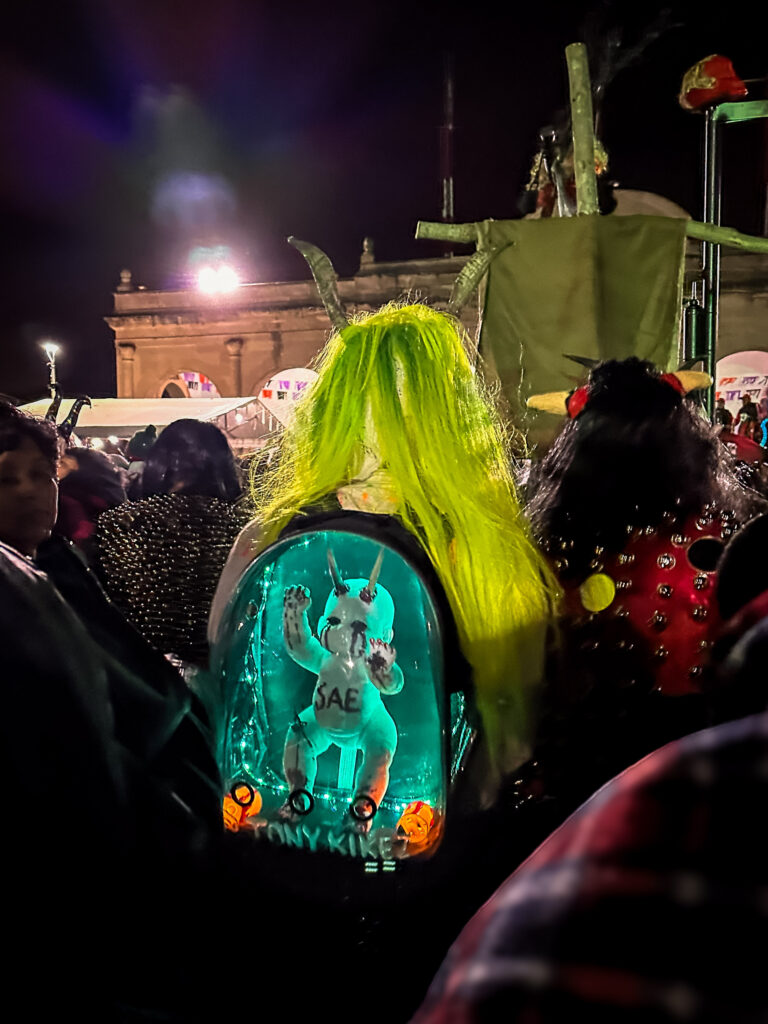
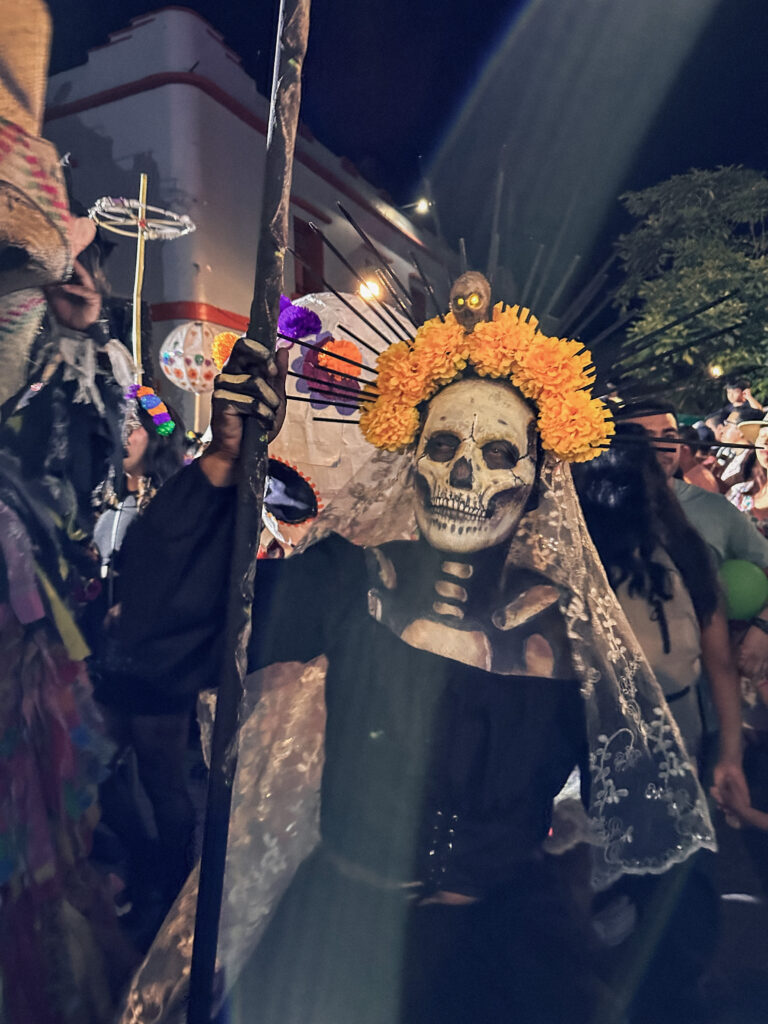
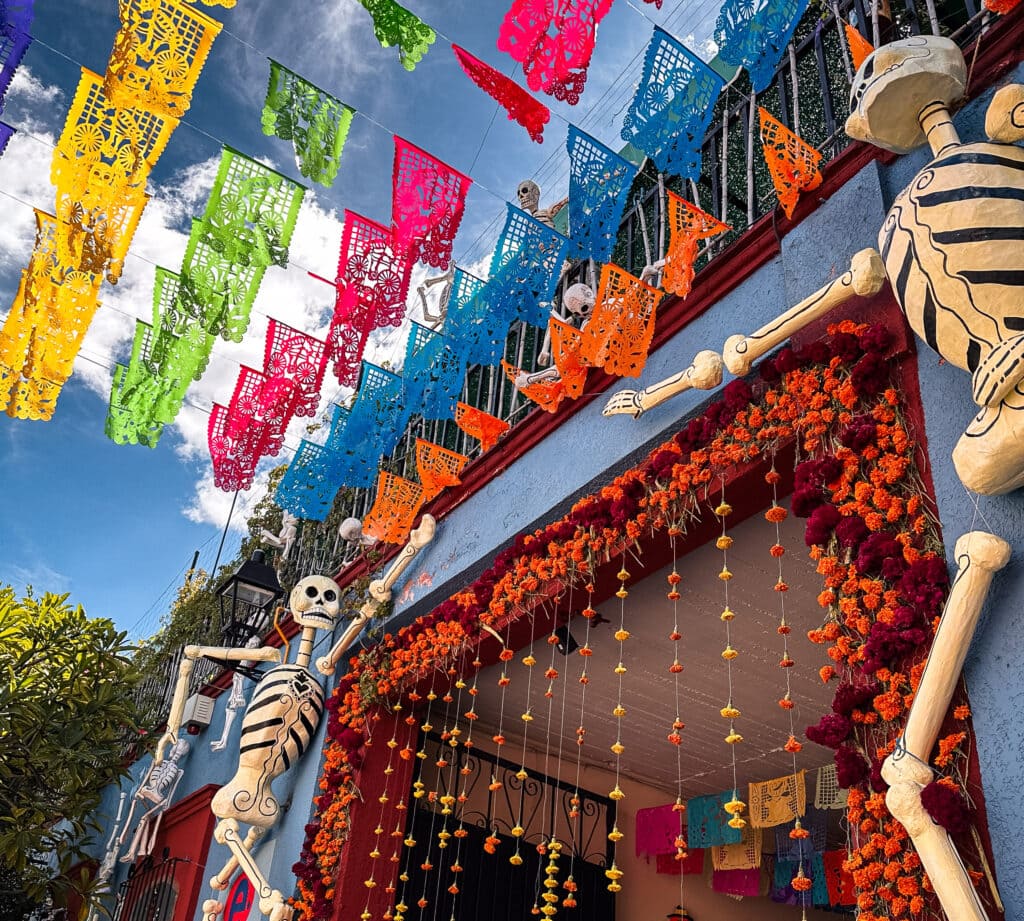
The city was alive in every sense. Streets strung with colourful papel picado, brass bands weaving through the crowds, and altars and every home, shop and street corner. One night I found myself in San Etla, surrounded by mezcal, dancers, and a man playing a tuba literally on fire. Another night, costumes so elaborate and surreal they felt like something from a dream.
For a few days it was impossible not to get swept up in the rhythm of it all. Oaxaca during Día de los Muertos is vibrant, chaotic, and deeply moving. It is a celebration of life and death that lingers long after you leave.

When I Went
29 October – 2 November 2023

How Long I Stayed
5 days / 4 nights

Nearly Packed List
Click to expand my full list
Clothes: shorts, t-shirts, dresses, leggings, jeans, light jacket or hoodie (layers for cool evenings)
Shoes: comfortable shoes or trainers
Essentials: socks, underwear, hat, sunglasses
Gear: camera body + 1 all-rounder lens, spare battery, memory card
Extras: reusable water bottle, sunscreen, small backpack for tours
Best Time to Visit
Late October into early November is the obvious choice if you want to be there for the festival. The official dates are always 1 and 2 November, with 31 October marking the start of preparations. Depending on the year, this can fall mid-week or over a weekend, so plan around the fixed dates rather than the calendar days.
Outside of this period, Oaxaca is still a rewarding destination year round, with colourful markets, mezcal tours and a thriving food scene, but nothing compares to the energy of Day of the Dead.
What To Expect in Oaxaca
LANGUAGE
Spanish is the official language. English isn’t widely spoken, so having a translation app or knowing a few key phrases goes a long way, especially in markets and smaller shops.
CURRENCY
The currency is the Mexican Peso (MXN). Most restaurants, bars and shops in Oaxaca city accept card payments, but it is smart to carry cash for markets, street food and taxis. ATMs are widely available in the city centre.
GETTING AROUND
Oaxaca is very walkable, especially if you stay near the historic centre or Jalatlaco. For trips further afield, such as Hierve el Agua, joining an organised tour is the easiest option.
PLUGS
Mexico uses plug types A and B, with a standard voltage of 127 V and frequency of 60 Hz. A universal adapter will cover you.
SAFETY
Oaxaca felt safe to walk around, even at night during parades and festivities. But as always (and anywhere), keep an eye on belongings in crowded areas and use common sense.
Getting There
I travelled from Mexico City (CDMX) to Oaxaca by bus. I bought my ticket online in advance and caught the early bus from the airport terminal, which was the most convenient option.
The journey usually takes 6-7 hours, though some services can be a bit faster. It is a long ride, but also a very scenic one, with stretches of beautiful mountains and countryside along the way.
Buses are comfortable, air conditioned and very affordable. If you are short on time, flights are also available.
Experiencing Día de los Muertos
DOTD is an experience that sweeps you up from the moment you arrive. The streets are buzzing, mezcal is flowing, and every neighbourhood has its own way of celebrating. It is impossible to stand on the sidelines as naturally, you end up right in the middle of it all. It’s an incredible experience.
Highlights included:
- Jalatlaco Neighbourhood
Cobbled streets lined with street art, colourful shops, restaurants, cafes, and papel picado (the perforated paper banners) strung across the sky. During Día de los Muertos, the whole area felt like a living artwork. - Coyote Aventuras DOTD Tour
Their Day of the Dead in San Gabriel Etla experience was unforgettable. San Gabriel Etla’s fiesta was full of energy, from brass bands and mezcal to a man dancing through the crowd with a tuba lit up by fireworks. The final parade was another level entirely: intricate costumes, masks, and performers fully in character. It felt less like a tourist spectacle and more like being welcomed into a beautiful community tradition. - Altars and Ofrendas
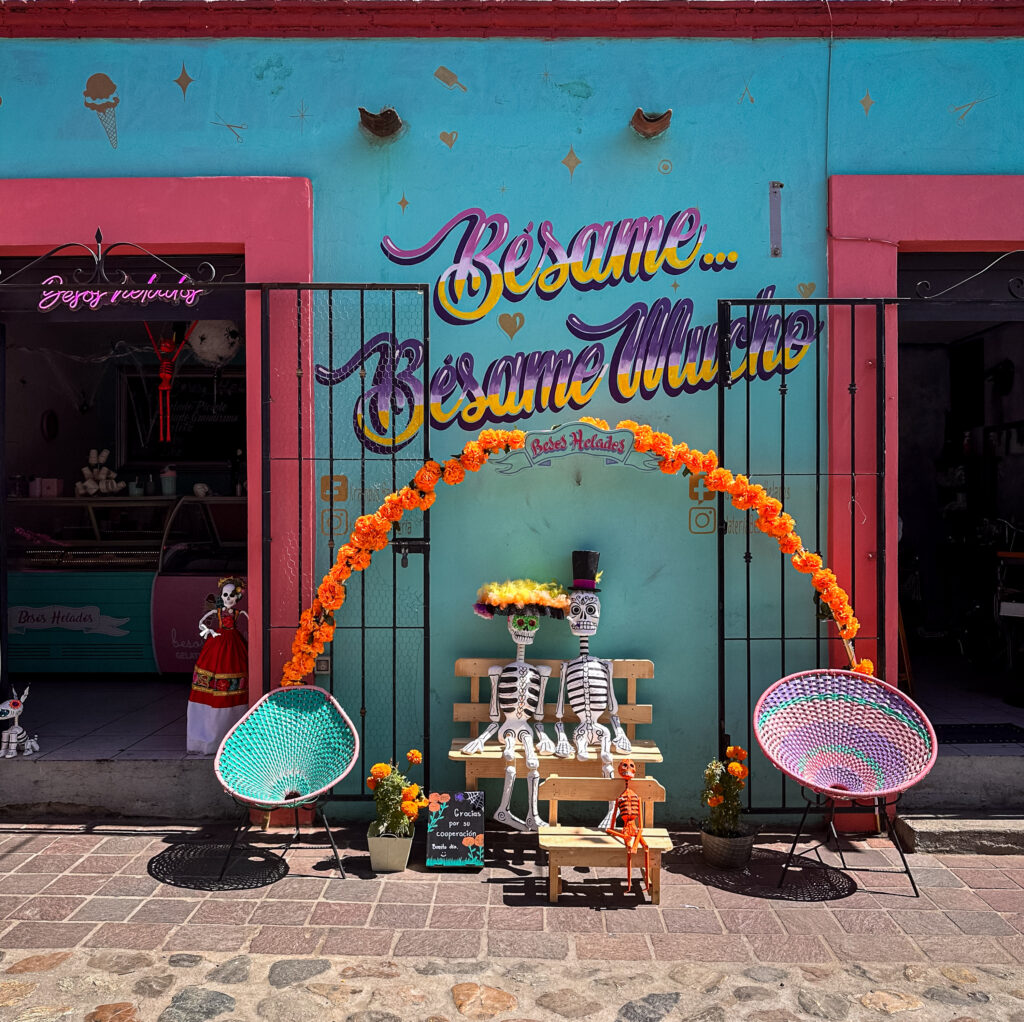
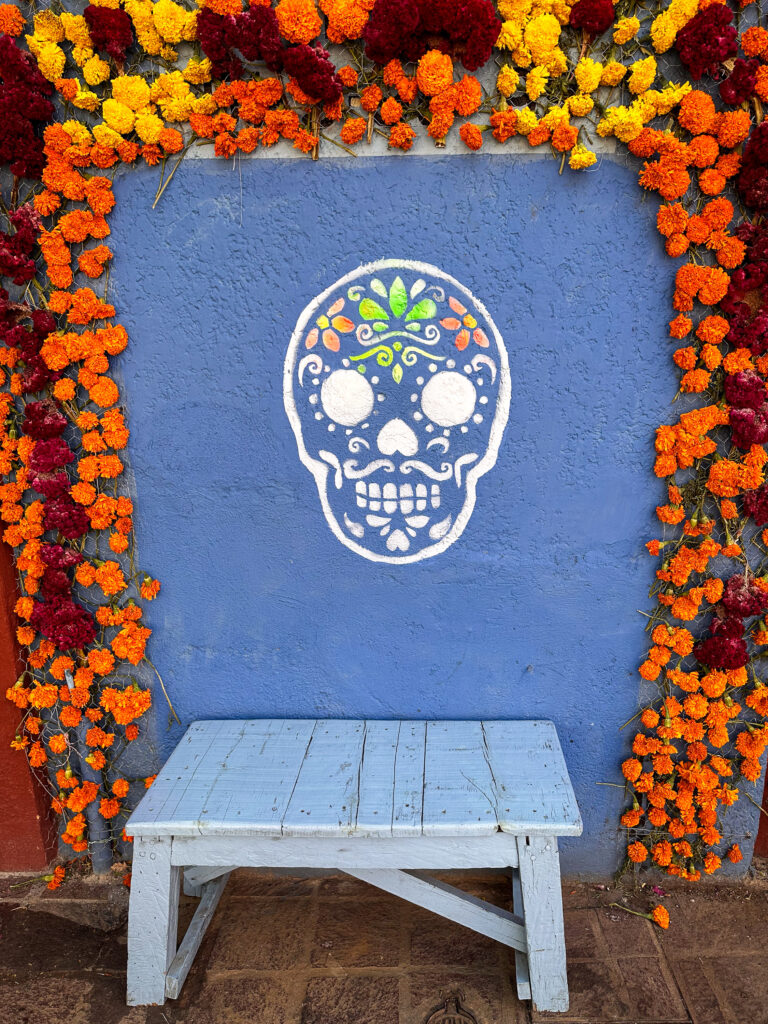
All around the city, homes, businesses and public spaces set up altars covered in marigolds, candles, food offerings and photos. It was beautiful to see how personal and communal the celebrations felt.
Tip: bring layers. Tours start warm in the afternoon but nights get cold fast.
Where to Stay in Oaxaca
Stay as close to the city centre or Jalatlaco as you can. Walking distance makes all the difference. Accommodation is extremely competitive during Día de los Muertos, so secure something well ahead of time (at least 6 months. No joke.).
Where to Eat
Oaxaca’s food scene absolutely deserves a mention. The city is a food lovers dream, from casual taco stands to creative brunch spots. These were a few of my favourites:
- ONNO — The standout meal of my trip. Stylish, inventive and absolutely delicious.
- Herbívora — A tiny vegan taco spot with a cosy atmosphere and excellent flavours.
- Tacos ROY — A local institution serving authentic, no frills tacos that are worth the wait.
Markets, street food and little hole in the wall taquerías are everywhere. Some of my best bites came from unplanned stops while wandering through the city.
Día de los Muertos Through the Lens